📞  — free, 24/7
— free, 24/7 — free, 24/7| Package | Price per Dose | Price | |
|---|---|---|---|
| 180 pills | €1.66 | €350.85 €298.22 Free shipping | |
| 120 pills | €2.03 | €287.06 €244.00 Free shipping | |
| 90 pills | €2.41 | €255.16 €216.89 Free shipping | |
| 60 pills | €2.71 | €191.37 €162.66 | |
| 30 pills | €3.01 | €106.31 €90.36 | |
| 180 pills | €2.49 | €526.29 €447.34 Free shipping | |
| 120 pills | €2.71 | €382.75 €325.34 Free shipping | |
| 90 pills | €3.01 | €318.95 €271.11 Free shipping | |
| 60 pills | €3.39 | €239.21 €203.33 Free shipping | |
| 30 pills | €4.07 | €143.52 €121.99 |
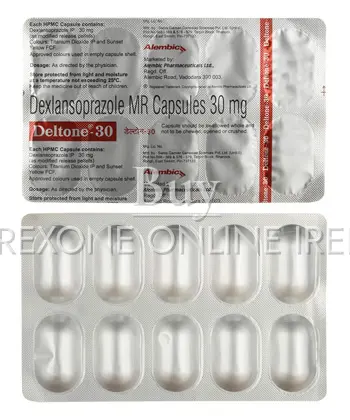
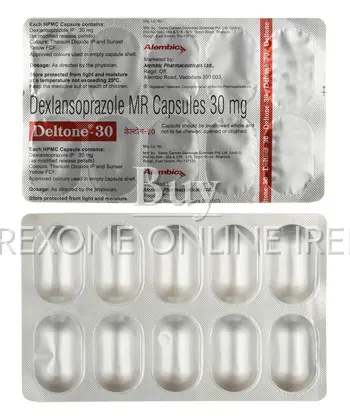
Dexlansoprazole is a proton pump inhibitor (PPI). Its mechanism involves irreversible inhibition of the gastric H+/K+-ATPase (proton pump) in parietal cells, resulting in sustained suppression of gastric acid secretion. Its primary therapeutic use is for gastroesophageal reflux disease (GERD) and for healing and maintenance therapy of erosive esophagitis associated with GERD.
Dexlansoprazole is the R-enantiomer of lansoprazole and is formulated as a dual delayed-release capsule. This design yields two distinct acid-suppressive peaks over a 24-hour period, providing prolonged daytime and nighttime gastric pH control. In pharmacologic terms, dexlansoprazole is rapidly absorbed, activated to the sulfenamide form in acidic environments, and then binds covalently to the luminal surface of the parietal cell to inhibit the proton pump.
Pharmacokinetically, the drug is primarily metabolized hepatically via CYP2C19 and CYP3A4 pathways, with a terminal elimination half-life that supports once-daily dosing in most patients. The dual-release formulation allows effective acid suppression independent of meals, though real-world dosing regimens may reflect clinical judgment and label recommendations. Dexlansoprazole can be used for healing of erosive esophagitis and for long-term maintenance of symptom relief in GERD.
Clinically, the agent is well tolerated in adults and is often chosen for patients who require consistent 24-hour acid suppression. It is important to monitor for symptoms of ongoing acid-related disease, to reassess therapy in patients with persistent GERD symptoms, and to consider alternative etiologies if breakthrough symptoms occur despite adherence.
The primary indications are healing of erosive esophagitis and maintenance therapy to prevent recurrence of erosive disease in GERD. Dexlansoprazole is also employed to relieve troublesome GERD symptoms such as heartburn and acid regurgitation in appropriate patients. In practice, clinicians select this agent when prolonged, consistent acid suppression is desired for symptom control and mucosal healing.
Therapy may be initiated in adults with confirmed GERD or erosive esophagitis, with ongoing assessment to determine the need for continued therapy. The drug may also be used as part of a strategy to reduce the risk of complications related to chronic acid exposure, such as stricture formation or esophagitis-related pain. Dosing decisions are individualized, taking into account severity of disease, response to therapy, and comorbid conditions.
Contraindications include hypersensitivity to dexlansoprazole or any component of the formulation. Hypersensitivity reactions may present as rash, urticaria, angioedema, or anaphylaxis. In patients with a prior history of severe adverse reactions to substituted benzimidazoles, careful consideration and monitoring are required if re-exposure is contemplated.
Precautions apply to all patients receiving long-term PPI therapy. Prolonged acid suppression can increase the risk of gastrointestinal infections (eg, Clostridioides difficile), particularly in hospitalized or elderly patients. Clinicians should monitor for diarrhea that does not improve or for signs of pseudomembranous colitis, and management should follow applicable guidelines if infection occurs.
Long-term PPI use has been associated with reductions in magnesium levels and potential vitamin B12 deficiency; consider monitoring serum magnesium in patients at risk for hypomagnesemia and reassessing B12 status in patients with prolonged therapy or neurological symptoms. In patients requiring very long courses, periodic evaluation of bone health and fracture risk is prudent, especially in those with other osteoporosis risk factors.
Hepatic function should be considered prior to initiation, and dose adjustments are not routinely required in mild to moderate impairment, but clinicians should monitor for altered drug exposure in significant hepatic disease. Pregnancy and lactation require careful risk-benefit assessment; safety data in pregnant or breastfeeding individuals are limited, and alternatives with established safety profiles may be preferred if clinically feasible. Pediatric use requires evidence in the intended age group and should be guided by approved labeling and clinical judgment. In elderly patients, the potential for falls or electrolyte disturbances may warrant closer monitoring during therapy.
Common adverse events include diarrhea, nausea, abdominal pain, and upper respiratory tract infections. Headache is frequently reported and generally mild to moderate in intensity. Some patients may experience dizziness or fatigue. Skin rash and pruritus occur less often but warrant attention for possible hypersensitivity.
Uncommon effects include dry mouth, flatulence, and back pain. Elevations in liver enzymes have been observed in rare cases; hepatic injury is infrequent but should be considered in patients with preexisting liver disease or new onset jaundice, severe fatigue, or right upper quadrant pain. Ongoing diarrhea or persistent GI symptoms beyond several days should prompt evaluation for infectious etiologies or alternative diagnoses.
Rare events include severe cutaneous adverse reactions, angioedema, anaphylaxis, and acute interstitial nephritis. Long-term PPI use has been associated with hypomagnesemia, particularly in patients on concomitant diuretics, and with potential vitamin B12 deficiency after several years of therapy. Clinicians should counsel patients to report signs of electrolyte disturbance, neurologic symptoms, or unusual infections promptly.
Clinically relevant safety considerations include the potential for C. difficile infection and, with chronic use, possible osteoporotic fractures in susceptible individuals. If tone or severity of symptoms changes unexpectedly or new alarm features arise (unexplained weight loss, recurrent vomiting, dysphagia, GI bleed), re-evaluation is advised to exclude alternative diagnoses or complications.
Dexlansoprazole is metabolized by hepatic cytochrome P450 enzymes (primarily CYP2C19 and CYP3A4). Concomitant use with strong inhibitors or inducers of these pathways may alter dexlansoprazole exposure and the activity of concomitant medications. Clinicians should review a patient’s full medication list for potential pharmacokinetic interactions.
Drugs whose absorption is pH-dependent may have altered bioavailability when coadministered with dexlansoprazole. Examples include azole antifungals such as ketoconazole and itraconazole, and certain antiretrovirals (e.g., atazanavir) where reduced gastric acidity can decrease absorption and efficacy. In such cases, alternative dosing strategies or separate administration timing may be considered, guided by clinical judgment.
Antiplatelet therapy with clopidogrel may be affected by PPI coadministration due to potential reduction in the formation of its active metabolite; the clinical significance remains variable. When antiplatelet effect is essential, the clinician may choose a PPI with a minimized interaction potential or adjust therapy accordingly. Iron supplements and calcium-containing antacids may also have reduced absorption in the presence of ongoing acid suppression, so timing of dosing relative to dexlansoprazole can influence iron and mineral status.
Caution is advised with high-dose methotrexate therapy, where altered gastric pH may influence drug disposition and toxicity. Patients on these regimens should be monitored per established oncologic or rheumatologic protocols. Overall, patients should inform their prescriber of all medications, including nonprescription agents and herbal products, to optimize safety and efficacy during dexlansoprazole therapy.
14–21 days. Free from €178.15 .
5–9 days. €26.72
−10% when paying with cryptocurrency.
−10% on all repeat orders.
All orders are packed in neutral, unbranded boxes with no product name on the outside.