📞  — free, 24/7
— free, 24/7 — free, 24/7| Package | Price per Dose | Price | |
|---|---|---|---|
| 180 pills | €0.87 | €175.57 €158.02 | |
| 120 pills | €0.98 | €130.42 €117.38 | |
| 90 pills | €1.14 | €113.70 €102.33 | |
| 60 pills | €1.28 | €85.27 €76.74 | |
| 30 pills | €1.51 | €50.15 €45.14 | |
| 180 pills | €1.76 | €352.83 €317.55 Free shipping | |
| 120 pills | €1.88 | €250.83 €225.74 Free shipping | |
| 90 pills | €2.05 | €204.00 €183.60 Free shipping | |
| 60 pills | €2.18 | €145.47 €130.92 | |
| 30 pills | €2.41 | €80.25 €72.23 |
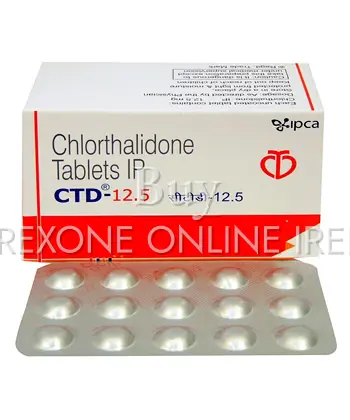
The agent is a thiazide-like diuretic that acts on the distal nephron to impair sodium and chloride reabsorption. The resulting increase in tubular output of water, sodium, and chloride reduces extracellular fluid volume. Over weeks, this volume effect contributes to lower systemic vascular resistance, contributing to blood pressure reduction beyond the immediate diuretic effect.
Pharmacokinetically, chlorthalidone is rapidly absorbed after oral administration and exhibits substantial protein binding. Its long elimination half-life yields a prolonged antihypertensive action, often persisting beyond 24 hours. The drug is primarily excreted via the kidneys, with a portion undergoing biliary clearance. These properties support once-daily dosing in most patients with essential hypertension.
Pharmacodynamic effects extend beyond diuresis. In addition to volume depletion, chlorthalidone can improve endothelial function and reduce left ventricular workload over time. The combination of sustained plasma concentrations and direct vascular effects underpins its role in long-term cardiovascular risk management, especially when used with other antihypertensive classes.
Chlorthalidone is a first-line option for essential hypertension and is frequently employed as either monotherapy or in combination with other antihypertensive agents. By reducing plasma volume and arterial stiffness, it lowers systolic and diastolic pressures and contributes to decreased cardiovascular event rates in long-term practice guidelines.
Beyond blood pressure control, the agent is used to manage edema associated with heart failure, cirrhosis, and nephrotic syndromes. In selected patients, it can aid in diuretic therapy when edema persists despite other measures, or when a longer-acting diuretic is advantageous for symptom control and fluid balance.
Chlorthalidone also has a role in certain metabolic contexts. It is sometimes prescribed for idiopathic hypercalciuria to reduce urinary calcium excretion and lower the risk of calcium-containing kidney stones, reflecting its influence on calcium handling in the distal nephron.
Typical dosing for adults with hypertension starts at 12.5 to 25 mg once daily. In some cases, 50 mg daily may be used, but clinicians often begin at the lower end to assess tolerability and minimize electrolyte shifts. Doses are individualized based on response and comorbidity profile.
Chlorthalidone tablets are taken by mouth, with or without food. The daily dose is commonly administered in the morning to lessen nocturia. Tablets should be swallowed whole; crushing or splitting is usually not advised unless directed by a clinician. If a dose is missed, take it as soon as remembered unless it is near the time of the next dose; do not double the daily dose.
Ongoing use requires periodic monitoring of blood pressure, renal function, and electrolyte levels. Clinicians may adjust concomitant medications to optimize safety and efficacy. Adequate hydration is advised, and NSAID use should be discussed with a clinician, as NSAIDs can blunt diuretic effects and affect renal function.
Electrolyte disturbances are common with chlorthalidone and can include hypokalemia, hyponatremia, and disturbances of magnesium and chloride. These changes may cause weakness, cramps, confusion, or arrhythmias in susceptible individuals. Patients should be counseled to report symptoms promptly.
Contraindications include anuria and known hypersensitivity to sulfonamide-derived drugs. Caution is advised in renal impairment, gout, diabetes mellitus, and pregnancy or lactation, as thiazide-like diuretics can alter metabolic parameters and fetal perfusion. Prior to starting therapy, a physician should review concurrent medications for interactions that may exacerbate electrolyte imbalance or hypotension.
Safety in older adults requires careful dosing and monitoring due to baseline electrolyte variability and comorbidity. Patients taking lithium, digoxin, or drugs that influence potassium or sodium balance may need dose adjustments or closer surveillance. Regular laboratory tests and blood pressure checks are recommended during treatment.
Most patients tolerate chlorthalidone well, but common side effects relate to its diuretic action and electrolyte effects. Patients may experience increased urination, dehydration, dizziness, or lightheadedness, particularly when rising to standing. Headache and abdominal fullness can also occur.
Electrolyte disturbances such as low potassium or sodium can present with muscle cramps, weakness, or confusion. Some individuals may notice raised blood glucose levels or uric acid, which can influence glycemic control or trigger gout symptoms in predisposed patients.
Photosensitivity, rare rash, or sensitivity reactions have been reported with thiazide-like diuretics. Infrequent but serious adverse events include severe electrolyte depletion or hypotension, requiring medical attention and potential dose modification or discontinuation. Patients should seek guidance if new symptoms develop.
14–21 days. Free from €178.01 .
5–9 days. €26.70
−10% when paying with cryptocurrency.
−10% on all repeat orders.
All orders are packed in neutral, unbranded boxes with no product name on the outside.