📞  — free, 24/7
— free, 24/7
— free, 24/7
| Package | Price per Dose | Price | |
|---|---|---|---|
| 360 pills | €1.35 |
€696.39
€487.48
Free shipping
|
|
| 270 pills | €1.50 |
€580.32
€406.23
Free shipping
|
|
| 180 pills | €1.53 |
€395.47
€276.83
Free shipping
|
|
| 120 pills | €1.96 |
€335.29
€234.70
Free shipping
|
|
| 90 pills | €2.27 |
€292.30
€204.61
Free shipping
|
|
| 60 pills | €2.39 |
€204.17
€142.92
|
|
| 30 pills | €3.01 |
€128.94
€90.26
|
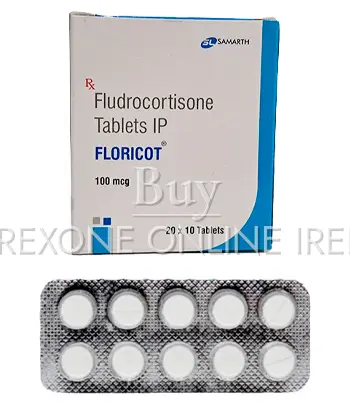
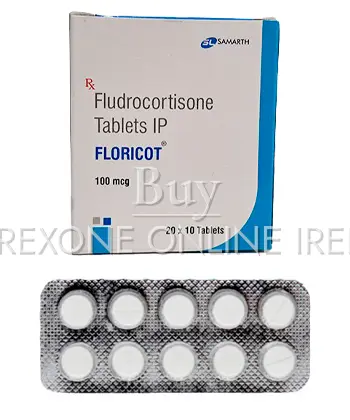
Fludrocortisone, introduced in the 1950s as a synthetic mineralocorticoid, is widely used for replacement therapy in mineralocorticoid deficiency. It remains a cornerstone in the management of adrenal insufficiency requiring sodium reabsorption and extracellular fluid expansion.
Pharmacologically, fludrocortisone is a potent agonist at the renal mineralocorticoid receptors with limited glucocorticoid activity. It is administered orally and has a prolonged duration of action suitable for daily dosing in most adults and children.
Fludrocortisone provides restoration of mineralocorticoid activity in conditions with aldosterone deficiency or aldosterone resistance. It supplements endogenous mineralocorticoid effects to promote renal sodium reabsorption and potassium excretion, supporting intravascular volume and blood pressure.
Therapeutic use is commonly alongside glucocorticoid replacement in adrenal insufficiency to maintain electrolyte balance and hemodynamic stability. Dose and duration are guided by clinical response and electrolyte monitoring.
Primary indications include mineralocorticoid replacement in adults and children with primary adrenal insufficiency (Addison disease) in combination with glucocorticoids, to correct hyponatremia and hyperkalemia and to maintain blood pressure and hydration. It is also indicated for salt-wasting forms of congenital adrenal hyperplasia, where inadequate aldosterone production leads to sodium loss and volume depletion.
Secondary indications encompass hypoaldosteronism due to disorders of the renin–angiotensin system, such as hyporeninemic hypoaldosteronism, where fludrocortisone helps correct Na+ loss and hyperkalemia. It is used in select cases of refractory orthostatic or postural hypotension due to volume depletion, as an adjunct to volume expansion and other supportive measures. In these contexts, careful electrolyte monitoring is essential to balance fluid status and potassium balance.
Fludrocortisone acts as an agonist at mineralocorticoid receptors in the distal nephron, increasing sodium reabsorption and potassium excretion. This promotes extracellular fluid expansion, increased circulating volume, and improvement in blood pressure. Its relatively low glucocorticoid activity minimizes metabolic effects at standard replacement doses but can contribute to mild anti-inflammatory actions at higher exposures.
Metabolic processing occurs in the liver with renal and biliary routes for elimination. The onset of clinical effect aligns with oral absorption and renal response, typically within hours to days, with adjustments based on blood pressure and serum potassium and sodium levels.
Common adverse effects include edema, hypertension, headache, and hypokalemia due to potassium wasting. Long-term use may precipitate or worsen congestive heart failure, fluid overload, or pressure-related complications; monitor blood pressure, weight, and electrolytes regularly. Abrupt dose changes should be avoided to prevent hemodynamic instability, and concomitant glucocorticoid therapy should be continued at appropriate replacement doses. Caution is advised in pregnancy and in patients with renal impairment or heart failure, with individualized dosing and close clinical follow-up.
14–21 days. Free from €177.95 .
5–9 days. €26.69
−10% when paying with cryptocurrency.
−10% on all repeat orders.
All orders are packed in neutral, unbranded boxes with no product name on the outside.