📞  — free, 24/7
— free, 24/7 — free, 24/7| Package | Price per Dose | Price | |
|---|---|---|---|
| 180 pills | €1.66 | €350.47 €297.90 Free shipping | |
| 120 pills | €2.03 | €286.74 €243.73 Free shipping | |
| 90 pills | €2.41 | €254.88 €216.65 Free shipping | |
| 60 pills | €2.71 | €191.16 €162.48 | |
| 30 pills | €3.01 | €106.19 €90.26 | |
| 180 pills | €2.48 | €525.71 €446.85 Free shipping | |
| 120 pills | €2.71 | €382.33 €324.98 Free shipping | |
| 90 pills | €3.01 | €318.60 €270.81 Free shipping | |
| 60 pills | €3.39 | €238.95 €203.11 Free shipping | |
| 30 pills | €4.06 | €143.36 €121.86 |
Disclaimer: This information is intended for patients in Ireland and provides general guidance about Dexilant. It does not replace personalised medical advice from a clinician or pharmacist.
Dexilant (dexlansoprazole) is a proton pump inhibitor (PPI) that reduces stomach acid production by inhibiting the gastric H+/K+-ATPase enzyme found on the surfaces of parietal cells in the stomach lining. The primary therapeutic purpose is to treat gastro-oesophageal reflux disease (GERD) and to aid in healing erosive oesophagitis, where the oesophageal lining is damaged by acid. The effect is to raise the gastric pH (lower acidity) and provide symptoms relief over time.
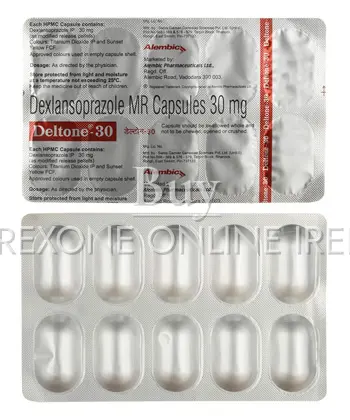
Dexlansoprazole is formulated as a dual delayed-release capsule. This means the active drug is released in two separate waves, providing a prolonged period of acid suppression. The two phases help maintain a higher gastric pH across the day, which supports symptom control and mucosal healing in affected areas of the oesophagus.
Dexilant is the R-enantiomer of lansoprazole, meaning it is one of two mirror-image forms of the same parent molecule. An enantiomer is a non-superimposable mirror image; in pharmacology, the different forms can have distinct pharmacokinetic properties. The dual-release design is a distinguishing feature that can influence how quickly and how long acid suppression lasts.
In many settings, Dexilant is prescribed for adults to manage GERD symptoms and to promote healing of erosive oesophagitis. In Ireland, access and duration of therapy are guided by local prescribing rules and patient-specific considerations. Guidance from a clinician or pharmacist should be followed, particularly regarding long-term use and monitoring for adverse effects.
Dexilant is not an analgesic or a medication for immediate, rapid relief of heartburn. Symptom relief often develops over days to weeks, and complete healing of erosive oesophagitis may take several weeks. If symptoms persist or worsen, a clinician should be consulted promptly to reassess therapy and investigate possible alternative or additional causes of symptoms.
Dexilant is typically used for adults with GERD-related symptoms, including heartburn and acid regurgitation, and for healing of erosive oesophagitis confirmed by a clinician. The aim is to reduce stomach acid enough to allow the oesophagus to heal and to reduce irritation and discomfort from reflux. Erosive oesophagitis is characterised by visible damage to the oesophageal lining due to acid exposure.
Maintenance therapy following healing of erosive oesophagitis may be considered to prevent relapse of symptoms. The decision to continue Dexilant for maintenance depends on symptom severity, healing status, and individual risk factors. The target is to maintain symptom control while minimising adverse effects from long-term therapy.
Dexilant is generally prescribed to adults; pediatric use is limited and subject to specialist guidance. Availability and indications may vary by country and region, and local guidelines will determine the exact approved uses for Dexilant in Ireland. A clinician will determine suitability based on the patient’s history and current condition.
When initiating treatment, the clinician considers the pattern and severity of GERD symptoms, prior responses to acid-suppressive therapy, and potential interactions with other medications. In cases of suspected non-responsive GERD, alternative diagnoses or concomitant conditions such as functional heartburn or functional dyspepsia may be explored, and additional tests could be warranted.
Dexilant is not indicated for relief of acute, life-threatening conditions or for use as an analgesic. If a patient experiences new or worsening symptoms, bleeding, choking episodes, vomiting blood, or unintentional weight loss, urgent medical evaluation is advised. Seek urgent medical help if such symptoms occur.
Special populations, including older adults and those with renal or hepatic impairment, may require dose adjustments or monitoring. The decision to continue Dexilant in these populations depends on clinical response and tolerability, with periodic reassessment by a clinician or pharmacist recommended.
The prescribing clinician will provide instructions tailored to the patient’s needs. If there is any doubt about whether Dexilant is appropriate, the official patient information leaflet and the hospital or community pharmacist should be consulted for up-to-date, country-specific guidance.
Off-label use refers to prescribing information or dosing that is not explicitly approved by regulatory authorities but may be considered by clinicians based on individual patient needs and emerging clinical experience. Dexilant may be used off-label in some scenarios where acid suppression is beneficial but the official indications differ from the patient’s presentation. Decision-making should involve a clinician and be guided by risk–benefit considerations.
Commonly discussed off-label considerations include use in patients with persistent GERD symptoms despite prior therapy, in selected patients with non-erosive reflux disease, and as part of a broader acid-suppression strategy when there is comorbidity warranting a more sustained pH elevation in the stomach. Such decisions require careful assessment and ongoing monitoring for efficacy and safety.
When used off-label, the choice of Dexilant should be contextualised with other therapeutic options, including lifestyle modifications, alternative acid-suppressive agents, and endoscopic or surgical approaches if indicated. The clinician will weigh potential benefits against risks such as nutrient malabsorption, infections like C. difficile, and possible long-term adverse effects associated with reduced gastric acidity.
In specific circumstances—such as comorbidities, polypharmacy, or concerns about drug interactions—the clinician may adjust dosing, formulation, or duration of therapy. Patients should be counseled about potential changes in symptom patterns and the importance of timely follow-up to ensure safe and effective management.
It is essential to approach off-label use with careful documentation and open communication with the treating clinician. If symptoms persist after a trial of Dexilant for an off-label indication, a reassessment is recommended to determine whether the treatment plan should be modified.
Dexlansoprazole is a prodrug that is activated in the acidic environment of the secretory canaliculi of gastric parietal cells. The active form then binds irreversibly to the hydrogen-potassium ATPase (the proton pump), blocking proton transport into the stomach lumen and thereby suppressing acid secretion. This results in higher gastric pH and reduced acidity.
The dual delayed-release formulation delivers the active drug in two separate releases, producing two peaks of plasma concentration and sustained acid suppression over a 24-hour period. The pharmacodynamic effect is a gradual and prolonged increase in gastric pH, which supports symptom relief and mucosal healing in the oesophagus and stomach lining.
The mechanism operates independently of meals to a degree, though absorption and activation are influenced by the gastric environment. The drug’s effect is considered irreversible for the active enzyme until new proton pumps are synthesized by the body, which contributes to the durability of acid suppression even when a dose is missed for a short period.
Dexlansoprazole targets the final step of acid production, differentiating it from other strategies that focus on acid neutralisation or antisecretory effects at earlier stages. The net clinical outcome is a reduction in acid exposure of the oesophagus and stomach, facilitating healing and symptom control over time.
Pharmacologically, dexlansoprazole is a substrate of hepatic cytochrome P450 enzymes, notably CYP2C19 and CYP3A4, and may exhibit interindividual variability in metabolism. Genetic differences in metabolism can influence drug exposure and response, which is considered during therapy planning in clinically appropriate situations.
Dexilant is typically prescribed as a daily capsule formulation. The standard dosing form is a once-daily regimen, with the capsule swallowed whole and with a sufficient amount of water. Do not chew or crush the capsule, as this could disrupt the dual-release mechanism and alter the timing of drug release.
The medication may be taken with or without food, depending on patient preference and tolerance. It is important to take the exact prescribed dose and timing, as altering administration can impact the duration and consistency of acid suppression. If a dose is missed, consult a clinician or pharmacist for guidance; in general, do not double-dose to compensate for a missed administration.
Two common strengths are available to accommodate individual therapeutic needs. The clinician will determine which strength is appropriate based on symptom severity, prior response to therapy, and the presence of any comorbid conditions. If a dose change is needed, this will be explained by the clinician and documented in the patient’s care plan.
Pharmacokinetic properties include absorption, distribution, metabolism, and elimination characteristics consistent with other PPIs. Peak plasma concentrations typically occur within a few hours of dosing, and the duration of acid suppression is driven by the irreversible inhibition of the proton pumps and the body’s turnover of pump enzymes. Metabolism occurs primarily in the liver, with excretion via biliary routes, and these pathways can be influenced by concurrent medications and hepatic function.
In older adults or those with hepatic impairment, monitoring may be more important due to potential changes in metabolism and sensitivity to adverse effects. The clinician will consider these factors when determining duration and monitoring requirements for Dexilant therapy.
Practical dosing guidance should always be aligned with the prescribing clinician’s directions, which reflect the patient’s diagnosis, symptom pattern, and response to therapy. In many cases, a once-daily dosing schedule is appropriate, but the exact routine may differ for maintenance therapy or off-label considerations.
Tablets and capsules used for acid suppression are not interchangeable; if a patient switches products or formulations, a clinician or pharmacist should confirm the plan because altering the release profile can impact efficacy and safety. If a dose needs to be adjusted due to inadequate symptom control or adverse effects, a clinician will re-evaluate the regimen and provide revised instructions.
In the event of missed doses, do not double the next dose; instead resume the regular dosing schedule as soon as possible unless the time for the next dose is near. If symptoms worsen or new symptoms develop, contact a clinician promptly for guidance and potential reassessment of therapy.
If a patient experiences persistent or severe side effects, or signs of an allergic reaction, seek medical attention promptly. Seek urgent medical help if symptoms such as swelling of the face, throat, or lips, severe rash, or breathing difficulties occur, as these may indicate a serious reaction.
Long-term use of proton pump inhibitors, including Dexilant, requires periodic re-evaluation of necessity, effectiveness, and safety. This ensures that ongoing therapy remains appropriate for the patient’s clinical status and helps identify potential adverse effects or interactions early.
Dexilant should not be used in individuals with a known hypersensitivity to dexlansoprazole, other PPIs, or any component of the formulation. A history of severe allergic reaction to PPIs necessitates alternative approaches and discussion with a clinician before initiating therapy. If a reaction occurs, treatment should be stopped and medical advice sought.
The most commonly reported adverse effects include headache, diarrhea, abdominal pain, nausea, and flatulence. These events are usually mild to moderate in intensity and tend to resolve with continued therapy or dose adjustments. If adverse effects persist or worsen, contact a clinician for guidance.
Prolonged or high-dose use of Dexilant may contribute to nutrient malabsorption, particularly of vitamin B12, magnesium, and calcium, which may have clinical consequences with extended treatment. Regular monitoring and assessment of nutritional status are advised for long-term users as part of routine medical care.
Serious but uncommon adverse events may include severe skin reactions, liver enzyme abnormalities, or signs of an infection such as Clostridioides difficile in the bowel. If severe or persistent abdominal pain, fever, or bloody stools occur, seek urgent medical evaluation.
In pregnancy or lactation, the use of Dexilant should be guided by a clinician after careful evaluation of potential benefits and risks. If pregnancy occurs while taking Dexilant, orderly medical advice should be sought to determine the appropriate course of action. Breastfeeding considerations should also be discussed with a clinician, as drug excretion into breast milk is possible.
Dexilant may interact with several medicines by altering gastric pH, which can influence the absorption of drugs that require an acidic environment for optimal absorption. Examples include certain antifungal agents, antiretrovirals, and calcium or iron supplements; clinicians may adjust therapy or timing to mitigate these interactions.
Concomitant use of Dexilant with clopidogrel has been a topic of clinical discussion, as reduced activation of clopidogrel could potentially diminish its antiplatelet effect in some patients. The clinical relevance varies between individuals, and alternative strategies or monitoring may be appropriate in some cases.
Dexilant is metabolised by hepatic cytochrome P450 enzymes, notably CYP2C19 and CYP3A4. Variations in genetic metabolism (fast or slow metabolizers) can influence drug exposure and response. Awareness of this variability is important in cases of suboptimal response or unusual adverse effects, and specialist input may be warranted for dose adjustments.
Other medications, including those with narrow therapeutic indices, may require careful coordination with Dexilant therapy. It is essential to disclose all current medicines to the clinician or pharmacist to identify potential interactions and to adjust treatment accordingly.
Patients should avoid self-adjusting dose or frequency with the aim of improving efficacy or tolerability without professional guidance. If changes to medication regimens are necessary, a clinician will provide instruction on how to proceed safely and effectively.
Store Dexilant capsules in their original packaging to protect from moisture and light. The recommended storage temperature is room temperature, away from heat and direct sunlight. Keep the medication out of reach of children and pets to prevent accidental ingestion.
Check the expiry date on the packaging before use. Do not use Dexilant after the expiry date or if the capsule appears damaged. If there is any concern about storage conditions or integrity of the medication, consult a pharmacist for guidance.
Once a prescription is discontinued, safely dispose of any remaining capsules according to local guidelines. Do not flush medicines or pour them down the drain unless instructed by local waste management guidelines. Pharmacists can provide disposal information for the local area.
Patients should be instructed on the proper administration method: swallow capsules whole with water, and avoid crushing or chewing the capsule. If a dose is accidentally crushed or chewed, contact a clinician or pharmacist for advice regarding continued use and potential safety concerns.
Storage and disposal considerations should be revisited during follow-up visits or medication reviews. Any concerns about storage stability, changes in packaging, or storage in non-ideal conditions should be discussed with a pharmacist or clinician to ensure ongoing safety and efficacy of therapy.
| Drug | Primary indication (GERD/esophagitis) | Distinctive feature | Typical administration note |
|---|---|---|---|
| Dexilant (dexlansoprazole) | GERD with or without erosive oesophagitis; maintenance therapy | Dual delayed-release formulation with two release peaks | Swallowed whole; can be taken with or without food |
| Omeprazole | GERD, erosive esophagitis, ulcers | Conventional PPI with once-daily dosing in many patients | Often taken before a meal |
| Esomeprazole | GERD, erosive oesophagitis, H. pylori-related ulcers | Isomer of omeprazole; often used for longer-term acid suppression | Typically taken before meals |
| Lansoprazole | GERD, erosive oesophagitis | Earlier-release formulation; available in various strengths | Adult dosing based on indication |
The following frequently asked questions (FAQ) are designed to support patients starting or continuing Dexilant therapy. For any unanswered questions or complex situations, a clinician or pharmacist should be consulted. If symptoms worsen, persist, or there is concern about side effects, seek professional healthcare advice.
All questions and answers below are provided as general information. They should not replace personalised medical advice. When in doubt, consult a pharmacist or doctor before making changes to therapy.
Answers emphasise cautious, practical guidance without prescribing details that would require individual assessment.
Where relevant, the information references standard considerations in Ireland, with emphasis on safety, monitoring, and appropriate healthcare contact in the case of adverse effects or suspected interactions.
If there is any risk of pregnancy, lactation, or interactions with other medications, the patient should discuss these factors with a clinician prior to continuing Dexilant therapy. In urgent or emergency situations, seek immediate medical assistance.
Dexilant may begin to provide symptom relief within a few days for some individuals, with more complete healing of erosive oesophagitis possibly requiring several weeks. The time to noticeable improvement can vary based on the severity of the condition and patient-specific factors. If relief is not apparent after a reasonable trial, a clinician should be consulted for reassessment.
If a dose is missed, take it as soon as remembered unless it is close to the time for the next dose. Do not double the dose to make up for the missed one. If it is almost time for the next dose, skip the missed dose and resume the regular schedule. If frequent missed doses occur, contact a clinician for guidance.
Dexilant can be taken with or without food, according to patient preference and tolerance. It is not necessary to adjust meals around dosing. If gastric discomfort occurs, discuss timing and meal choices with a pharmacist or clinician.
Stopping Dexilant abruptly after prolonged use can lead to rebound acid hypersecretion, meaning symptoms may return more acutely for a period. A clinician may recommend a gradual taper or an alternative plan to minimize symptom recurrence. Do not discontinue therapy without medical advice.
It is important to disclose all medicines, including over-the-counter drugs and supplements, to a clinician. Dexilant can influence the absorption of drugs that require an acidic environment. Some interactions may require dose adjustments or timing changes to preserve effectiveness and safety.
Use during pregnancy or breastfeeding should be guided by a clinician after evaluating potential benefits and risks. If pregnancy occurs while taking Dexilant, seek medical advice promptly to determine the appropriate course of action. Breastfeeding decisions should be discussed with a clinician, considering drug transmission through breast milk.
Severe or persistent side effects should be discussed with a clinician promptly. Seek urgent medical help if signs of an allergic reaction (such as swelling of the face or lips, difficulty breathing, or severe rash) occur. Infections of the bowel or unusual diarrhoea that is persistent warrants medical attention.
Long-term use of proton pump inhibitors may be associated with reduced absorption of certain nutrients, including vitamin B12 and magnesium. If therapy is planned for an extended period, discussions about monitoring nutrient levels and dietary adjustments may be appropriate with a clinician.
Interactions with blood thinners or antiplatelet medications can occur with some PPIs. It is important to discuss all cardiovascular medications with a clinician to determine whether monitoring or therapy adjustments are needed to maintain safety and effectiveness.
Dexilant uses a dual delayed-release formulation to provide two phases of acid suppression, which can offer prolonged acid control for some patients. This feature differentiates it from some other PPIs that release their active ingredient in a single phase. A clinician can explain whether this formulation is advantageous in a particular case.
Discontinuation decisions should be made with a clinician. Some patients may require ongoing therapy to maintain symptom control and healing, while others may be able to reduce or stop treatment under supervision. Regular follow-up helps determine the appropriate plan for each individual.
14–21 days. Free from €177.95 .
5–9 days. €26.69
−10% when paying with cryptocurrency.
−10% on all repeat orders.
All orders are packed in neutral, unbranded boxes with no product name on the outside.